


Head Lice Information
Three forms of head lice:
- Louse is the term used to describe an adult. An adult louse is about the size of a sesame seed and tan to grayish-white in color. Adult lice may live up to 30 days on a person’s head, and the female can lay between 100 and 200 eggs during that lifespan.
- Nit is the term for a louse egg. They are very hard to see and can be confused with hairspray droplets or dandruff. Nits are oval and usually yellow to white.
- Nymph is the term for a newly hatched baby louse. It differs from an adult louse only in size. Nymphs mature into adults in about 7 days
Head Lice Video
Shot with a High Powered Intel Play QNX Microscope with 60x and 200x magnification viewing a live louse digesting human blood while sitting on a hair. Length = 4:07 min
Other Informational / Self-Help Videos
- http://www.livestrong.com/video/1926-lice-health-byte/
- http://www.howcast.com/videos/155047-How-To-Treat-Head-Lice
NOTE: These videos are located on other websites and Natural Ginesis
is not responsible for their content. They are for informational purposes only.
Head Lice Life Cycle

- When a female louse finds its way onto the head of a person, she starts laying eggs, or nits, along with a saliva-based glue that firmly attaches the nits to the hair close to the scalp. An adult female can deposit 6-8 nits in 2 days!
- In a week or so, the nits hatch, and the newborn lice nymphs take their first meal of blood from the person’s head by attaching themselves to the hair shaft, an inch from the scalp.
- It takes about 10 days for a newborn louse to become an adult. Once an adult, the female louse can start laying eggs. This means it only takes 16 days for an egg (nit) to become a female louse capable of laying more eggs! Adult lice live for 9-10 days, making the total life span of a louse from egg to adult about 25 days.
- Nits are the hardest to remove from the hair. You may feel them before you see them. Some people mistake nits for dandruff, but dandruff is larger and white, and can be flicked off with your finger. Nits are tiny and yellowish-white and cannot be easily removed from hair.
How Lice Spread
Head Lice spread when people are in close contact or when they share clothing or personal items that have been in contact with the head or neck. Head lice do not fly or jump; they can only crawl.
Head lice can infest anyone, young, old, rich, poor, clean, or dirty! Avoid sharing personal items such as hats, coats, brushes, combs, and pillows.
The current poison head lice treatments are not working! Lice Trap Shampoo™ is safe and non-toxic!
Kids are getting "treated" multiple times with poisons that are toxic and hazardous! There are many well-documented health problems associated with the synthetic pesticide poisons used to "control" head lice. Any head lice control using dangerous, volatile, synthetic pyrethroids, pyrethrum, and/or pipernol butoxide can cause acute or chronic illness, nervous system damage, or worse! It also appears that head and body lice have become resistant to these toxins.
Lice Trap Shampoo™ Mousse Foam- A Safe, Natural Lice Treatment
When it comes to treating head lice, most parents want something that is both effective and gentle, especially when children are involved. That is precisely what makes Kleen Green Lice Trap Shampoo™ Mousse Foam such an outstanding natural lice treatment. It is a nontoxic, pesticide-free product proven to eliminate head lice and their eggs (nits) in just one head lice treatment. This cleansing mousse foam product uses a combination of naturally occurring active enzymes to remove head lice and nits without the risk associated with pesticide poisons. One canister, used as directed, has been 99% effective in removing the head lice and their nits!
Our enzyme formula is a truly non-toxic lice treatment for kids, offering a gentle yet highly effective alternative to chemical lice products. It is hypoallergenic, biodegradable, and safe for repeated use. Parents can apply it confidently, knowing they are protecting their children’s scalp and health at the same time.
HOW LICE LICE TRAP SHAMPOO WORKS
Lice Trap Shampoo Dissolves Nit GLUE! One application of this lice shampoo gets rid of head lice and the nits because the enzymes in Lice Trap soften the glue that holds the nits to the hair shaft, allowing them to be easily combed and rinsed away. The "resistance factor" never becomes an issue. The head lice and nits are off the head and down the drain in 30 minutes.
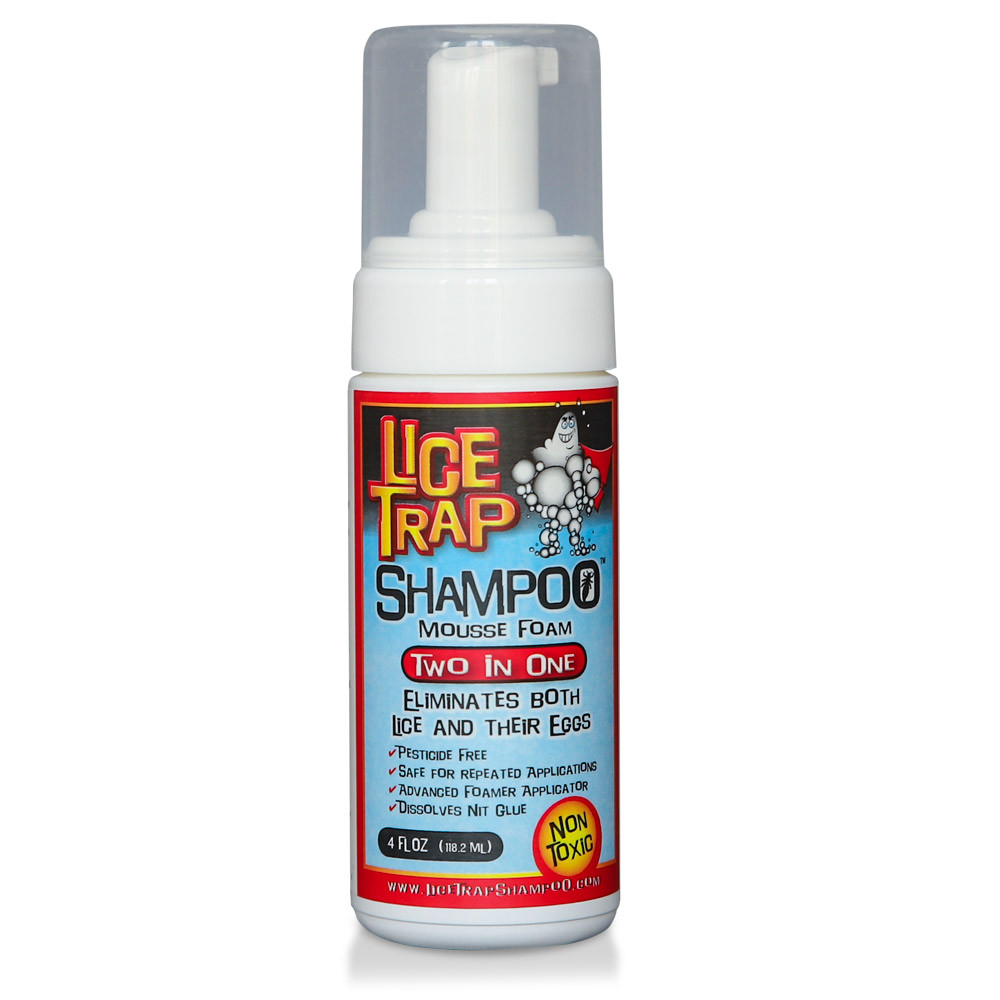
- Clinically proven to dissolve nit glue!
- 100% SAFE! NONTOXIC!
- Safe for repeated use. No retreatments - One step process!
- Completely biodegradable upon application.
- Has no residual contamination.
- Safe for people, pets, wildlife, and crops.
- Lice CANNOT become resistant to LICE TRAP SHAMPOO.
- Cost-effective - NO RETREATMENTS on the same infestation.
Directions for use:
- Wet hair with warm water at a bath or kitchen sink. DO NOT use this product while taking a bath or showering. Place a clean wash towel over your eyes for protection.
- Add a small amount of LICE TRAP SHAMPOO to hair and massage for 5 minutes.
- DO NOT RINSE!
- Add more mousse and massage for 5 more minutes. DO NOT RINSE!
- Continue to add and massage until half of 4oz. The bottle is used on the hair and scalp.
- With shampoo still in the hair, comb through the hair with a fine-tooth comb to assist in removing the nits that have been released. Rinse thoroughly with a strong spray of very warm water. The lice and the nits will rinse out.
- Inspect under bright light.
Lice Trap Shampoo is an extremely efficient shampoo and natural lice treatment option! It can lift pediculicide shampoos, pesticide poisons, hair spray glues, rinse-in hair color, and other debris and irritants from your hair and scalp. If you use this enzyme cleaner and you have previously used hair spray or hair color or have used previous pesticide (poison) lice shampoos, it is advised that you do not use this product in the shower. These previously used products can cause the hair to matte. If this occurs, simply apply a basic hair conditioner to the entire head. Leave on for approximately 30-60 minutes, then comb and rinse.
Always keep Lice Trap Shampoo out of your eyes and off your face if you get anything in your eyes, flush with generous amounts of water.
Tips for Lice Removal at Home
- Apply Kleen Green Lice Trap Shampoo and work it thoroughly through the hair and scalp.
- Use our Neon Nits Locator Spray to clearly identify nits under UV light for more precise removal.
- Spray bedding, pillows, and upholstery with Kleen Green as a safe lice spray for home This helps prevent reinfestation from surfaces.
- Use the Lice Trap Comb to manually remove nits from hair sections systematically.
- Wash all bedding, hats, and clothing that may have come into contact with lice in hot water.
Repeat the treatment process for at least 7 to 10 days to break the full lifecycle of the louse.
Why Kleen Green Is The Preferred Natural Lice Treatment
When you choose Kleen Green as your natural lice treatment, you are choosing a product that has been trusted by families for years. Our enzyme-based formula targets lice and nits without endangering your child’s health. And because it works as a safe lice spray for home environments too, you can treat both the scalp and the living space simultaneously, reducing the risk of reinfestation.
No toxic fumes. No harsh residues. Just a reliable, non-toxic lice treatment for kids that parents can feel good about using.
Kleen Green Product Line for Lice Elimination
- Lice Trap Shampoo
- Neon Nits™ Locator Spray
- Lice Trap Comb
- Pest Essential Oil Pack
- Natural Ginesis Mint Spray
- Lice Trap™ Shampoo Lice Life Cycle: How to Break the Lice Life Cycle.
- Head Lice Myths Exposed: Exposes embarrassing and/or dangerous myths commonly believed about head lice.
- The Facts of Lice: Great for sharing. Print it to distribute to schools, camps or clubs or for your own reference.
- Dangers of Head Lice Pesticides: Why it is so dangerous to use pesticides on your childs head.
- Did You Know? Just how poisonous are those other products? Lice Facts: More little or unknown Lice Facts that you need to know.
- Lice Facts: More little or unknown Lice Facts that you need to know.
Disclaimer
All Natural Ginesis products are safe and non-toxic when used as directed. Natural Ginesis is not a substitute for medical advice. The operators of this website and those who provide information for this site do not directly or indirectly practice medicine or dispense medical advice or services through this website. You should not rely on this information to determine a diagnosis or course of head lice treatment, nor should it be considered a replacement for consultation with a physician or other certified healthcare provider. Natural Ginesis and its distributors do not make representations or warranties with respect to any information offered or provided on or through any company websites regarding treatment, action, or application of the product. Neither Natural Ginesis nor any of its divisions or contributors shall have any liability for the content, errors, or omissions in the information provided by this website. Neither Natural Ginesis nor its distributors are responsible or liable for any advice, course of treatment, diagnosis, or any other information, services, or products that you obtain through this site. Those with health problems, pregnancy, or who are nursing are specifically advised that they should consult their physician before taking any nutritional supplement.
Thank You!